Apple studies AI healthcare use with an app for up to 200,000 users
- Casi d'uso
- Governance e compliance
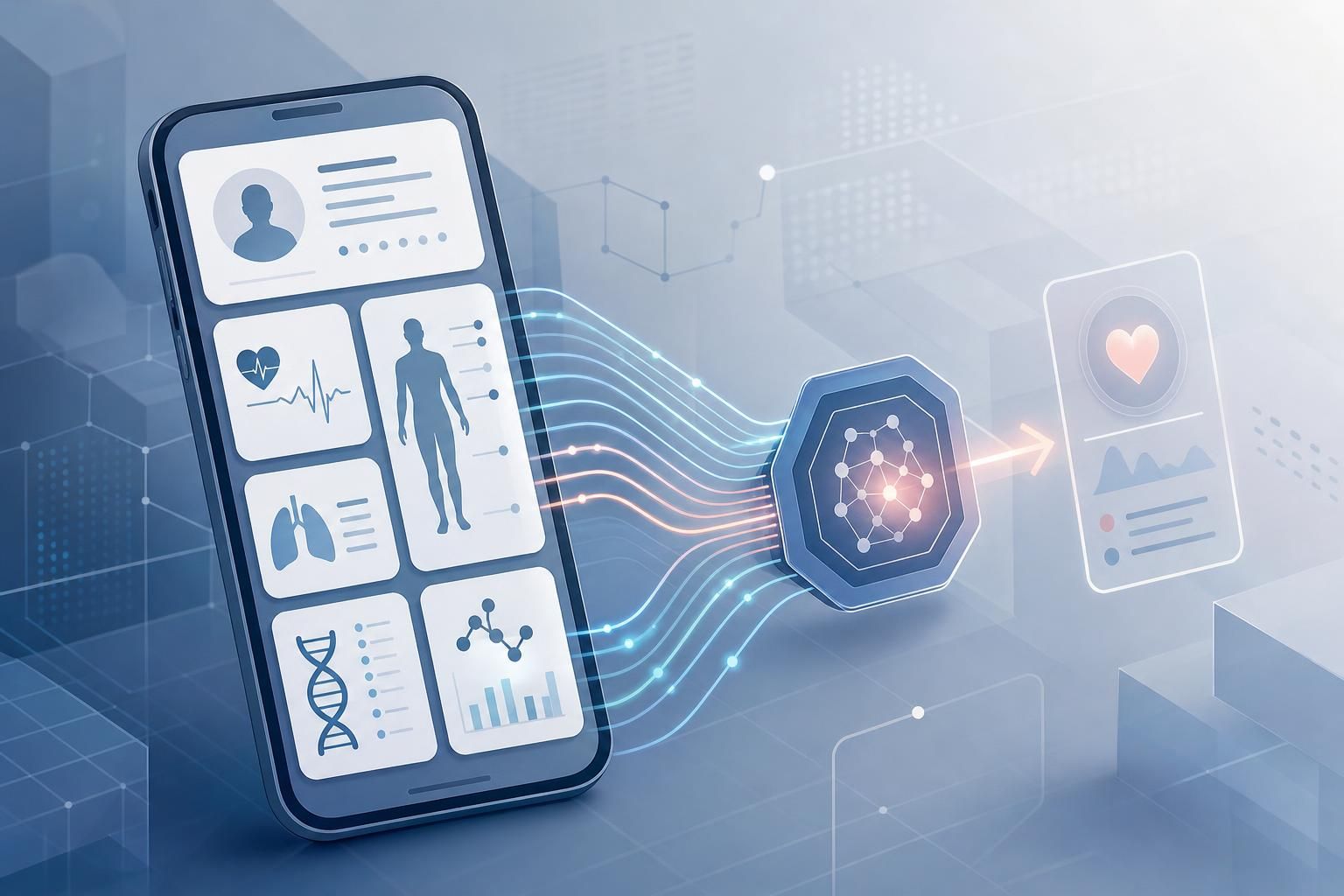
Apple has launched the Health AI Usage Study in the United States, a research project conducted through a dedicated app developed with OpenEvidence to observe how people use artificial intelligence tools on health-related topics. The study is open to adult users with iPhone 15 or later, iOS 26 or later, and Apple Intelligence enabled, and aims to involve up to 200,000 participants for more than twelve months. The app allows users to ask medical questions in natural language and returns answers based on clinical sources, including scientific journals such as New England Journal of Medicine, JAMA and Nature. Users can rate the quality of the responses, submit comments and take part in periodic surveys.
The most relevant aspect, for an enterprise and regulated-sectors audience, is that Apple does not present the initiative as a simple feature release, but as a structured study of user behavior, answer comprehension and the factors that build trust. This is an important distinction: in healthcare, the value of a system depends not only on the apparent accuracy of the response, but also on its comprehensibility, the context in which it is used and the ability to correctly direct users to a doctor when critical situations arise. According to reports, the app can also help users prepare better for a clinical visit and guide them toward appropriate professionals for potentially concerning issues.
A second point concerns the use of personal data. Participants can choose to share HealthKit data, such as resting heart rate, physical activity, sleep or lab results, to obtain more targeted guidance. Apple says the data is anonymized before being sent to a secure third-party cloud provider and will not be used to train artificial intelligence models; in addition, OpenEvidence would delete question-and-answer data after 24 hours. For those governing AI projects in healthcare, finance or public administration, this point is central: the promise of personalization must be accompanied by explicit limits on retention, data reuse and the separation between operational service and model training.
The news matters because it shows a concrete case of assistive AI in a high-responsibility sector, where validation, oversight and traceability of the scope of use are part of the product, not a later addition. Even without announcing a direct integration into the Health app or Siri, Apple is signaling that adopting conversational systems in healthcare requires observation protocols, feedback collection and clear operational boundaries. For organizations evaluating AI agents and assistants in regulated processes, the message is clear: usefulness depends as much on model quality as on the governance that controls data, suggestions and human intervention.
Source: Techmeme, 15 November 2026